Fusion Systems Design
Columbia students and staff participate in fusion design studies where they develop innovative concepts for fusion devices that satisfy physics, engineering and economic constraints.
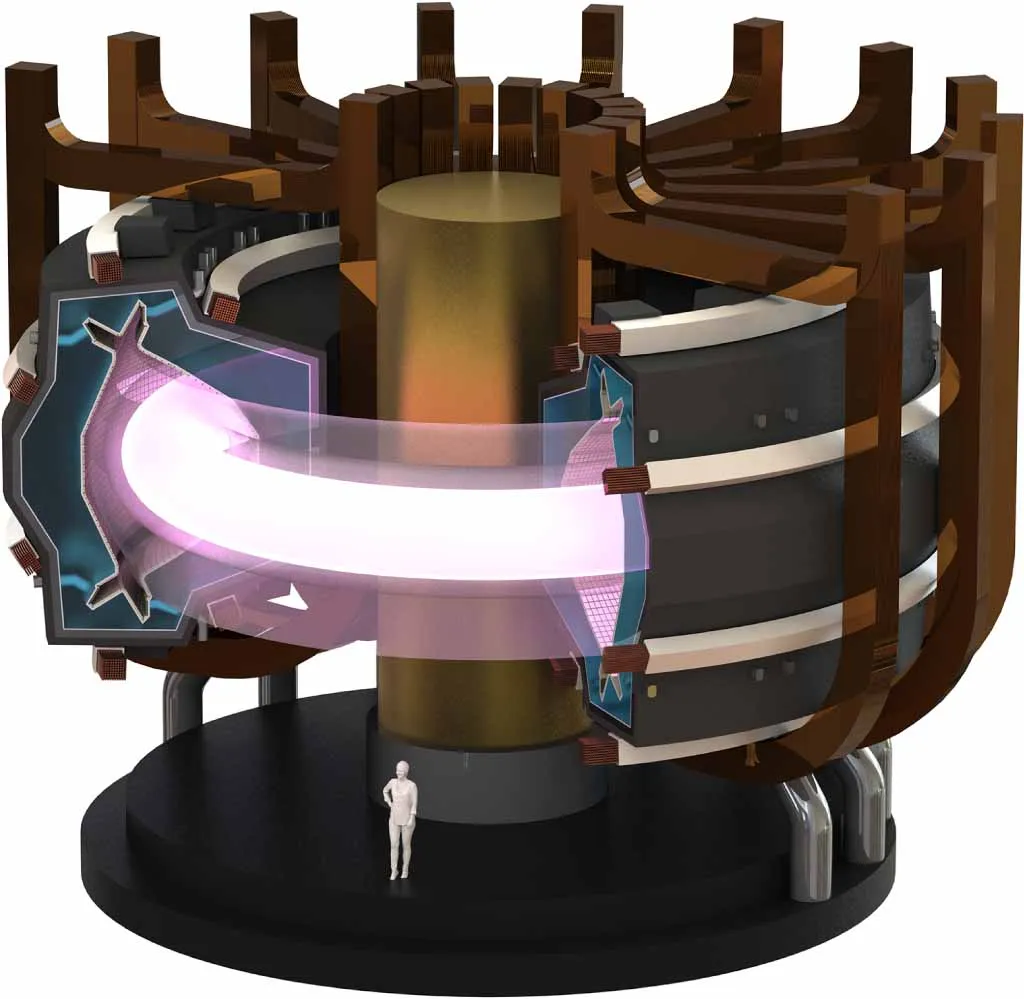
MANTA
As part of a joint Fusion Design course offered in Fall 2022, Columbia and MIT graduate students collaborated to design a negative triangularity fusion pilot plant that satisfies and exceeds the requirements described in the 2021 National Academies of Sciences, Engineering, and Medicine (NASEM) report 'Bringing Fusion to the U.S. Grid' (2021 Bringing Fusion to the U.S. Grid). The MANTA (Modular Adjustable Negative Triangularity ARC) tokamak design study presents a comprehensive tokamak concept incorporating an integrated plasma core scenario, power handling solutions, magnet design and maintenance, nuclear analysis, and a complete economic assessment.
Relevant data files for the integrated core modeling of the MANTA tokamak are publicly available on GitHub
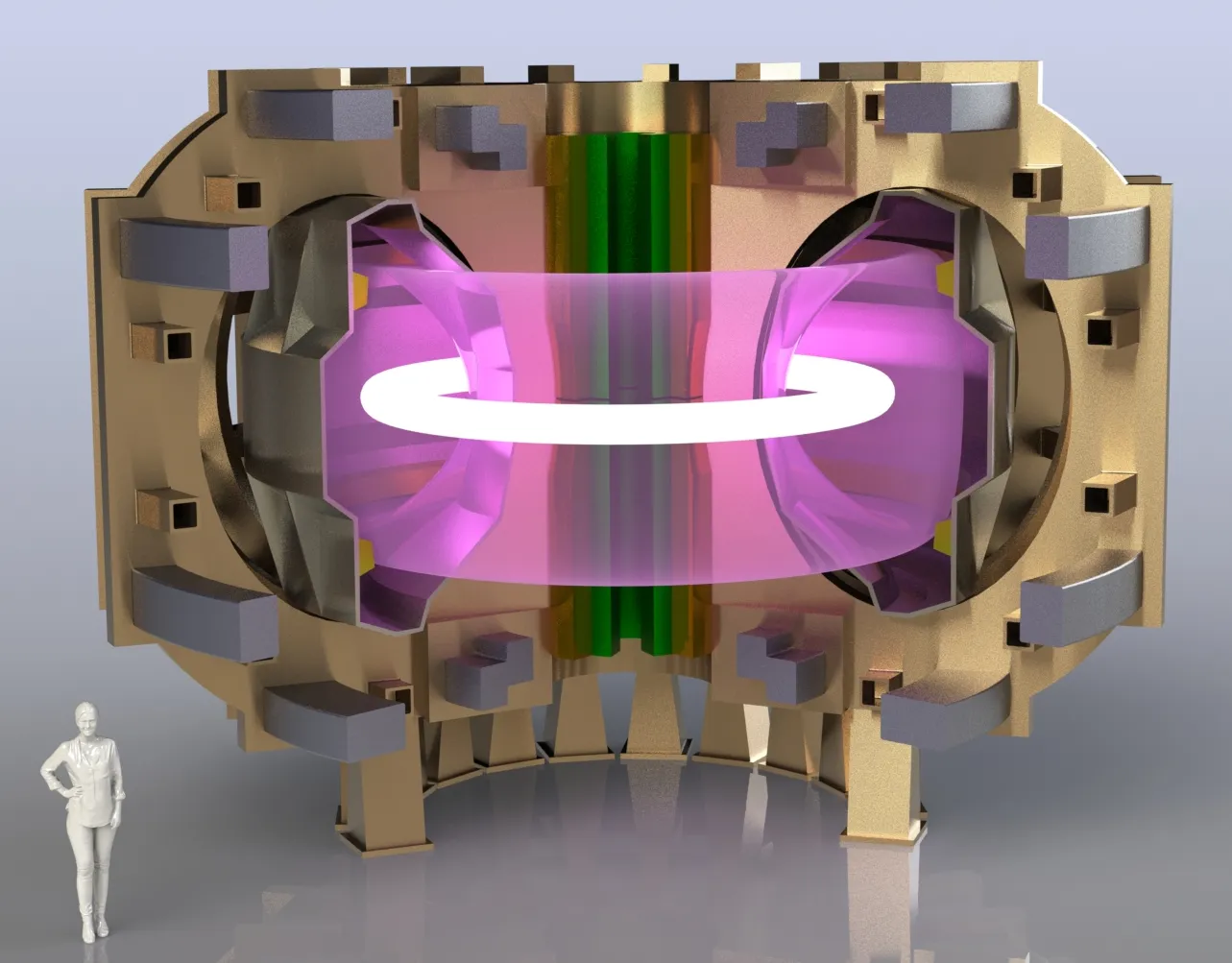
CENTAUR
In Fall 2024, Columbia offered the Fusion Design course again, where students from both Columbia and Princeton University students worked together to produce CENTAUR, the Compact Experimental Negative TriAngUlarity Reactor. CENTAUR is a break-even negative triangularity tokamak design that achieves net fusion gain leveraging only existing technologies, with a capital cost of 2 billion USD.
Stay tuned for an upcoming publication on CENTAUR!
The CENTUAR GitHub contains CENTUAR equilibrium files and a summary presentation on the device, and will continue to be updated with relevant data.