Suppressing MHD Instabilities and Avoiding Off-Normal Events
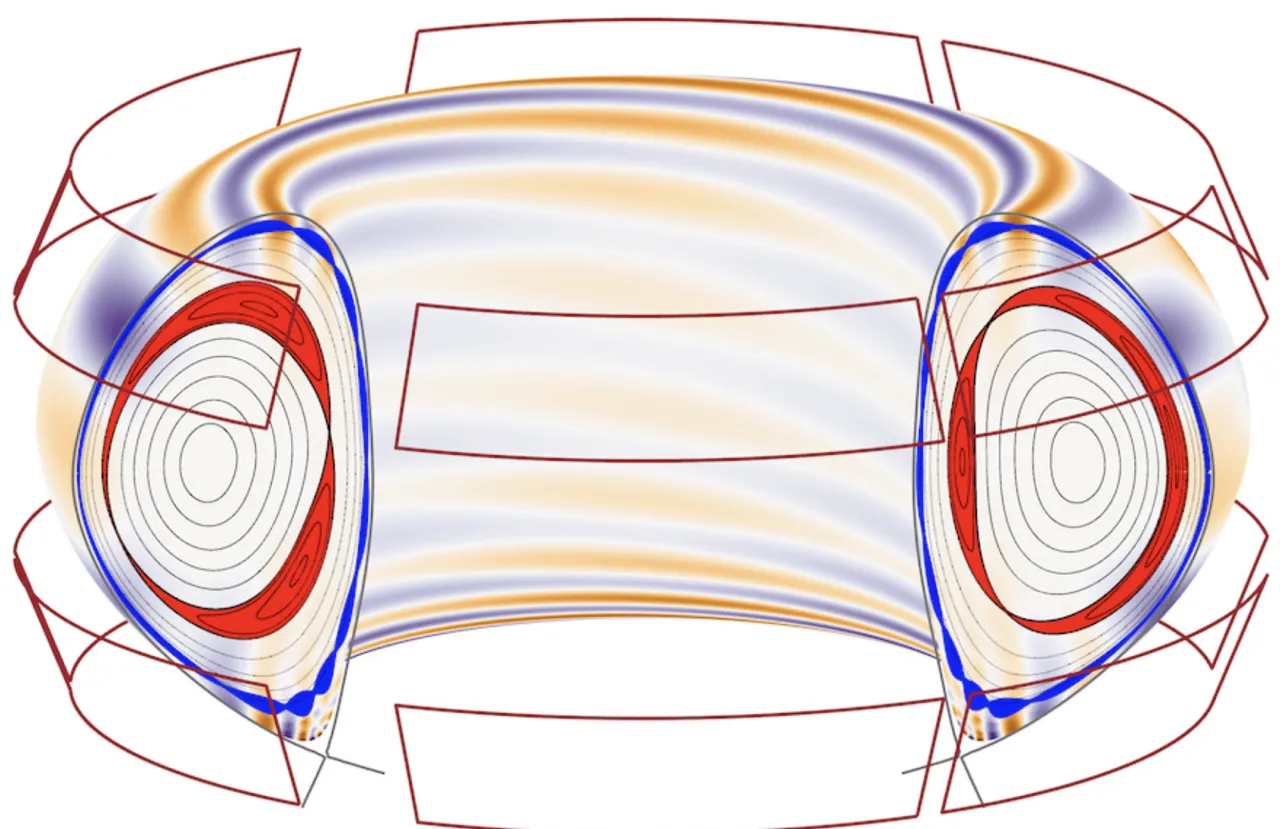
The goal of Columbia’s work in the fields of suppressing magnetohydrodynamic (MHD) instabilities and Avoiding Off-Normal Events (AONEs) is to provide reliable avoidance or mitigation of both core tearing modes (TMs) and edge localized modes (ELMs) to inform the design of a commercially viable fusion pilot plant (FPP). This research is organized and managed under three main thrusts, detailed below. A cross cutting effort informing all of these activities is the development of MHD stability and perturbed equilibrium modeling tools. Ultimately, this work’s goal is to enable reliable repeatability of FPP relevant scenarios without damaging heat fluxes to the wall.
Instability Control Research
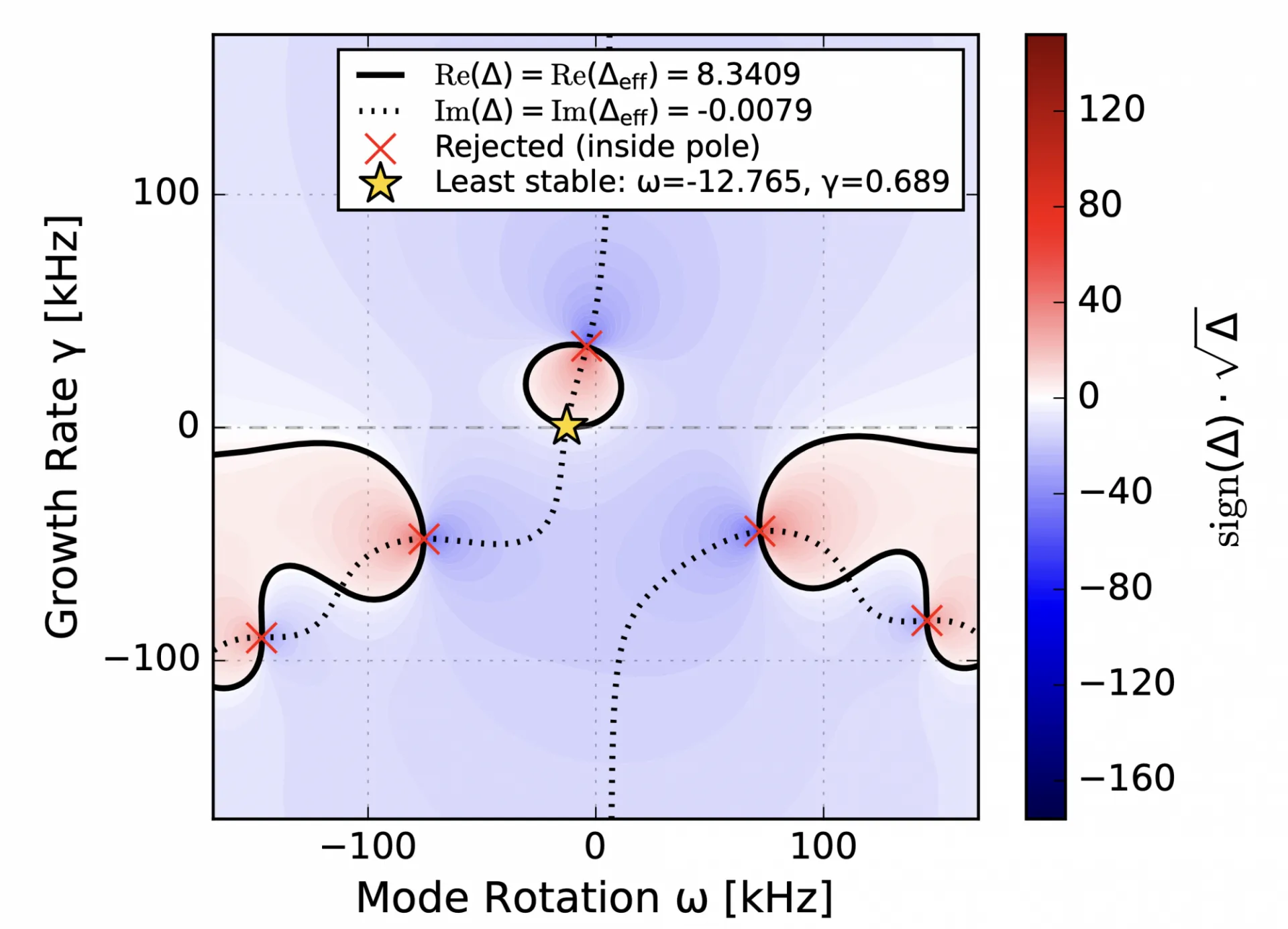
This thrust is focused specifically on tearing modes (TMs). It aims to validate models of the nonlinear TM-impurity interactions, provide full discharge stability forecasting for trajectory optimizations using FPP relevant actuators, and provide real-time (RT) models of TM stability and dynamics for use in integrated control systems.
Tearing modes are a class of resistive MHD instability that occur in tokamaks and can pose a serious threat to stable plasma operation. The magnetic islands opened by TMs result in particle and thermal energy losses, and in cases of unchecked growth, can “lock” to the wall due to eddy currents, drag against the plasma’s toroidal rotation, and cause a disruption. Understanding and if possible, predicting the onset of TMs will help design safer discharges from ramp-up to flat-top and ramp-down, substantially aiding
stable tokamak operation. Several in-house, open source codes are being developed and maintained within the GPEC suite that model different components of the TM stability problem — these include the ideal MHD TM stability of a tokamak equilibrium (STRIDE and RDCON), as well as the resistive MHD stability of a particular rational surface (SLAYER and RMATCH). These ideal and resistive MHD codes can be coupled to compute classical TM growth rates, and SLAYER can additionally be linked to the GPEC code to calculate error field (EF) and resonant magnetic perturbation (see next section) tearing responses in the core and pedestal.
Tokamaks are often thought of as toroidally symmetric and therefore reducible to two dimensions, but non-axisymmetric magnetic fields that are as much as 1000 times smaller than the toroidal field can cause tearing modes, leading to disruptions. Avoiding these requires strict tolerances on the placement and allowable tilts and shifts of the magnetic field coils and other parts of the device. Columbia is a leader in the prediction method of error field penetration scaling, which places constraints on the level of non-axisymmetric fields that will cause these harmful effects. Statistical models for future machines are compared against empirical scaling laws for the mode locking threshold, enabling the predictive optimization of engineering tolerances for these devices.
The most effective present EF correction optimization techniques in presently operating tokamaks are empirical, and sometimes cause disruptions in the process of identification. Future disruption-shy devices, such as ITER and fusion pilot plants (FPPs), will require EF correction that works out of the box, and thus will be dependent on verified strategies for mapping EF source measurements to correction coil currents. In order to meet this challenge, we validate EF source models on present devices, such as DIII-D and KSTAR, and demonstrate real-time, time-dependent EF correction based on detailed source models.
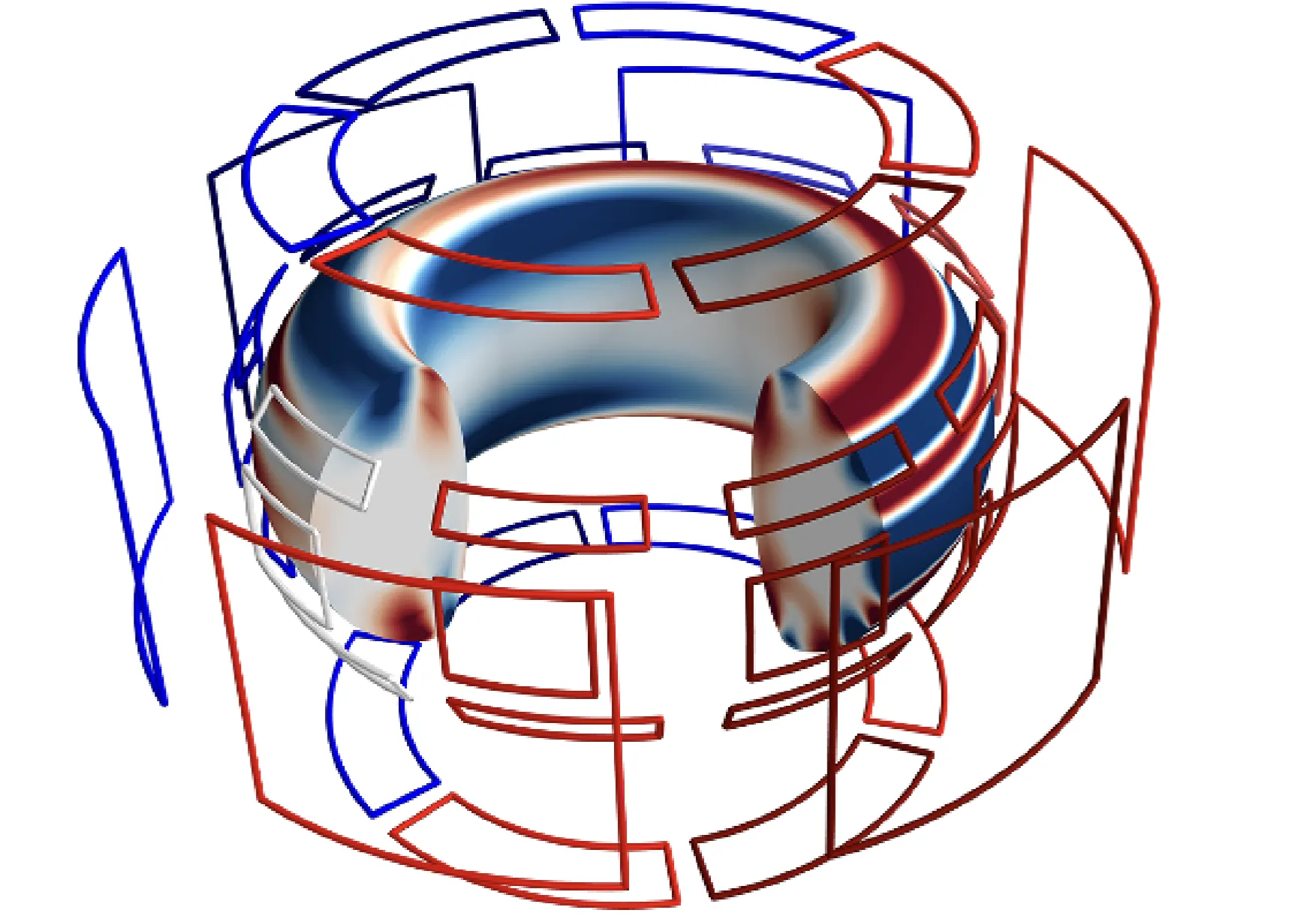
The Columbia efforts for resonant magnetic perturbation (RMP) suppression of edge localized modes (ELMs), leverage synergies between this and the same fundamental physics that is important for core tearing modes. The work in this thrust is focused on validating the underlying physics models for addressing critical RMP challenges, and then utilize this understanding to enable or extend robust ELM suppression in present and future tokamak devices. The RMP ELM control efforts will also be refined into RT models of the critical RMP suppression access conditions that must be maintained in order to robustly suppress ELMs.
At reactor scales, the transient heat loads expelled by ELMs are projected to exceed divertor material limits, making reliable RMP ELM control a critical requirement for reactor-relevant configurations. In order to be relevant for an FPP, RMP ELM suppression has to not only comply with technical constraints but also with the solutions to other major requirements for an FPP scenario. Therefore, at Columbia we investigate the effects of wave heating on RMP ELM suppression as well as extend its operational space towards high density and double null shaping for maximizing fusion output and high radiation fraction for exhaust control. Pushing those limits also improves our understanding of the fundamental physics mechanism behind RMP ELM suppression and tests models used for extrapolation towards an FPP.
Data driven and machine learning techniques also provide an important path for identifying RMP ELM suppression design thresholds. These techniques enable synthesis of multiple diagnostics with physics informed statistical models. Combining large scale data analysis of current tokamak RMP operations, machine learning and data based modeling can inform expectations of ELM activity of future devices. Furthermore, data based methods infer how critical RMP suppression fields can be applied in real time control systems.
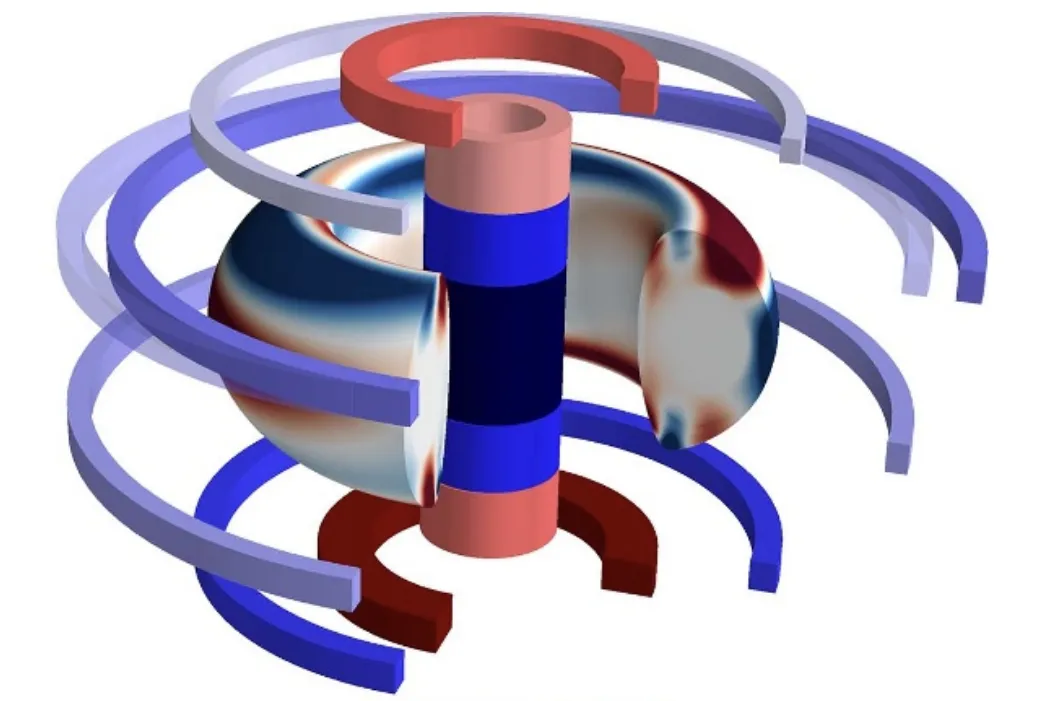
Preventing & avoiding off-normal events utilizes the physics insights and models of the first two efforts in unified real time control schemes and uses this to rigorously quantify our ability to control these transients. Ultimately, this will enable reliable repeatability of FPP relevant scenarios without damaging heat fluxes to the wall.
Our group works closely with plasma control system (PCS) experts at the DIII-D US National Fusion Facility and international tokamak facilities such as KSTAR in Korea to assess the proximity to instabilities in real time and adjust actuators on the plasma to avoid those instabilities. We do this through reduced physics models informed by the detailed studies above as well as by using Machine Learning (ML) surrogate models or data-based models when appropriately extrapolatable to a fusion pilot plant. Examples of real time detection include locked mode detection developed in the KSTAR PCS to suppress such modes before they grow large enough to disrupt the plasma. Reduced and data-based ELM suppression forecasters are under development to inform the DIII-D PCS and assist maintenance of robust suppression as plasmas evolve in time.
A cornerstone of our stability and control research is the development and application of the Generalized Perturbed Equilibrium Code (GPEC) package, which provides a rigorous physics foundation for linking real-time plasma control to first-principles stability limits. GPEC comprises a suite of nonaxisymmetric stability and perturbed equilibrium tools—including DCON, RDCON, STRIDE, GPEC, and PENTRC—that are used to assess stability to three-dimensional modes and, when stable, to compute the resulting nonaxisymmetric force balance in tokamak plasmas. These capabilities are critical for understanding and predicting the phenomena described above which can rapidly degrade confinement or trigger disruptions. By quantitatively determining proximity to these limits, GPEC enables the development of reduced physics models that remain interpretable while being fast enough for real-time control applications. In parallel, we maintain an active collaboration with Seoul National University to refactor the decades-old Fortran GPEC suite into a readable, modular, and extensible Julia codebase, significantly lowering the barrier for new students and researchers to engage with, validate, and extend these tools.